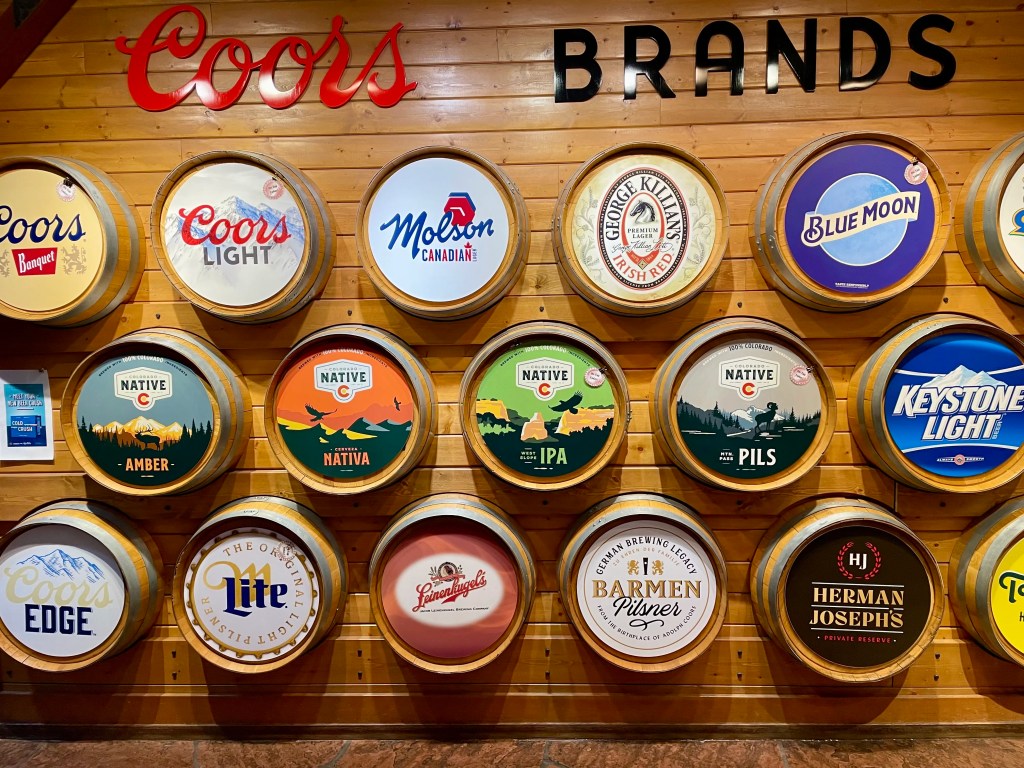
The final piece to a semester-long project. A document that is ready for professional review and capable of standing up to executive‑level scrutiny. Section by section, this deliverable begins with an “Executive Summary” of my findings, mainly that Molson is a legacy company that will continue their steady growth, and should be considered in an investor’s portfolio who has a long-term timetable for returns. I then move into an all-encompassing overview of the company, everything from the alcoholic beverage industry to why the mountains of the infamous Coors Lite can turn blue when exposed to cold temperatures for extensive periods of time (thermochromic ink). My document then shifts into an analysis of their financials, including their revenue drivers and intangible asset heavy balance sheet. Lastly, the results of my valuations and industry exploration paint the picture of a strong company who’s financial profile reflects strength and stability. In other words: Coors isn’t going anywhere!
The launchpad for my university studies in Finance was a book I read the summer after my senior year of high school; Crisis Economics: A Crash Course in the Future of Finance by Nouriel Roubini. This nonfiction work investigated the housing market crash of 2008, highlighting everything from the perilous collateralized debt obligations (CDOs) hedge funds were selling to the institutional avarice that collapsed the world economy. These insights prompted my call for reform with major institutional banks, namely the risk that they are able to assume and the transparency that is needed to be communicated to the average investor. Since the American people were the ones who absorbed the impact of corporate greed at its worst, meaningful reformation has become essential.


Attending LMU has led me to taking many religious courses, none more impactful than “Interreligious Dialogue.” This course gave me the opportunity to not only explore the foundations of many world religions, but further interact with their respective religious spaces and clergy in the greater LA area. From interviewing my home parish’s pastor to learning about the Self-Realization Fellowship (SRF) from a church sister, I gained invaluable knowledge about these differing faith traditions. The scope of this class centered on how these religions engaged in interfaith work with other traditions, and that same focus guides this document. In addition to the three “site visits” I attended during the semester, I completed volunteer work with an LMU Service Org, Sursum Corda, and experienced how they took part in interreligious engagement with surrounding places of worship. This project attests to the genuine need for interfaith collaboration as a necessity for communities to understand and collaborate with one another.
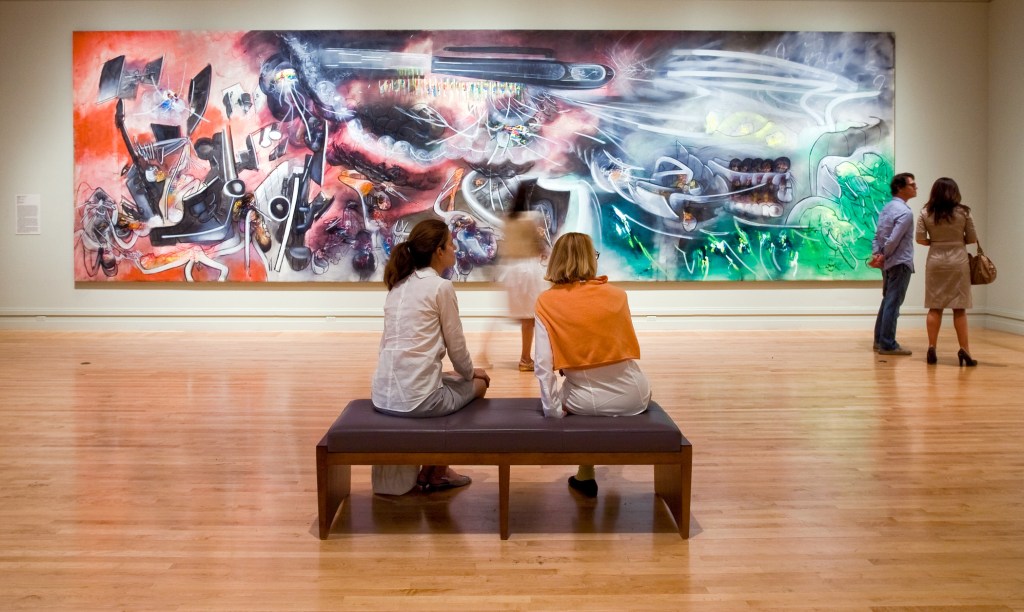
In a plot twist no one saw coming – least of all me – “Contemporary Art” became my favorite class that I have taken in college. Had my schedule allowed for it, I would have certainly added a minor in Art History to my resume. This document is an exploration of the oil on canvas painting Burn, Baby, Burn! by Roberto Matta framed in the context of the Watts Rebellion of 1965 and the broader Contemporary Art Movement of the 20th century. I stood in front of this work at the Los Angeles Museum of Contemporary Art (LACMA) and was utterly overwhelmed at the sheer magnitude of it. Matta’s 32 foot juxtaposition of destruction (left) and a hopeful future (right) for the Watts community caught my attention immediately, and turned out to be incredibly fun to unpack.
 George Tupy